I am sure there have been numerous blogs written about this topic, and everyone has a different opinion about it. Here is my two cents after traveling around the world, and consuming an unhealthy amount of nerdy aviation related information:
What to Wear
1. 100% cotton or wool top and bottom. Ideally thicker cottons like gaberdine or light denim. This means, no synthetic workout outfits, no shorts, no pyjamas or sweatpants, no half-sleeves (specially if you are not carrying a jacket). It has to be comfortable, yet strong and semi-formal. Pockets are important, the more pockets the better. Avoid one-piece clothes like overalls, jumpsuits, rompers etc. Regardless of the weather, carry or wear a light jacket, ideally cotton or wool-based material with full chain or button up.
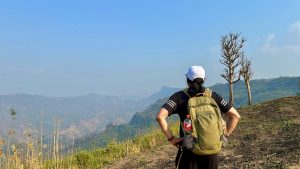
2. Try to blend in. Similar theory like going on a safari or hiking on a forest trail, darker earthy natural colours.
3. Wear mid to high-rise cotton or woollen socks, thicker socks with a little sole cushioning, pressure-socks for long-haul flights. Avoid open-toe sandals, formal shoes or high-hills. never skip your socks. Put on sneakers/trainers, something that is comfortable for long walks.
For women, the philosophy is similar, choose an outfit as if you are on a long comfortable hiking trip through a forest trail, you do not want to attract insects and animals, something that covers you up and protects from light bruises and scratches, and layers that you can remove when needed.
What to Pack in Your Carry-on
Among all your regular things, plus, here is a list of items not to miss in your carry-on specifically
1. Pack at least one set of clothes including a pair of socks and underwear in your carry-on.
2. A basic grooming set with at least a toothbrush, a 100ml or less toothpaste, a small can of shaving foam, razor, carry-on-friendly pair of scissors (there is no universal rule about the allowed dimension, I have carried the same pair of scissors through the US and Singapore but got confiscated at Edinburgh airport for example) a roll-on deodorant (sprays are generally not available in carry-on size), lip-balm and lotion, hand-sanitiser, mosquito/insect repellent, anything else that you must use within a 12 or 24 hour interval (regardless of your flight duration).
Suggestions from a female friend: You may want to pack a scarf, a handkerchief, your must-have make-up and hygiene products, a comb, and a moisturiser.
3. Prescription medicines, keep the physical prescription right in your pocket or purse, it can not go in your checked-in luggage. And pack at least one additional pair of prescription glasses, if you wear one. Avoid contact lenses.
4. All your cables, plug socket converters, charger adapters. If you can, avoid battery packs or power banks altogether. Most modern long-haul aircraft nowadays have USB ports or AC power sockets. Keep your phone charged through those. The rules about battery-packs are changing frequently, and they are inconsistent across different airlines and airports, avoid it if you can.
5. A reusable water bottle, ideally metal.
6. A ballpoint pen with sealed bottom (high altitude pressure-difference can cause cheap ballpoints to leak) or a pencil, and a pocket-notebook. Do not rely on your digital devices for certain crucial information, the name, address and phone number of your destination, phone numbers of your personal emergency contacts, and your own home address and phone number—note these down physically.
Here Is Why
This is “preparing for the worst” strategy. Although air travel is extremely safe, and pretty punctual, things can go wrong. And we should dress and pack to face the worst. While most airlines have their own dress code, and chances are, you can be denied boarding because of what you are wearing, example, some airlines strictly forbid high-hills, enforces socks; these are for safety, not fashion or culture.
At the Airport and on the Plane
Reducing Exposure: Planes and airports are dirty! The less skin you expose, the better. Hence, “no shorts, no half-sleeve” is important. You probably should also wipe all the areas around the seat with sanitiser that you may have to touch. Also you may be sleeping, you do not want to show more than what looks decent while you are not conscious in public.
Specially for women, avoiding dresses with one-piece clothing is important, as it is awkward when you go to the airport bathroom and you have to remove your top and bottom both, and it is difficult to take it off inside a tiny airplane toilet.
Having a jacket with pockets is helpful for carrying all your little electronics that otherwise you’d have to painfully find and take out during a security check. The jacket also helps with managing temperature differences, which can be quite a big difference depending on your origin, onboard temperature, and destination weather.
Darker earthy colour palette helps with hiding stains and spills, which are very common during a trip. Also the “blending in” colours can help to avoid being singling out or standing out in a crowd, it reduces the chance of being pulled for an additional security check or being asked to measure your carry on at check-in.
Wearing socks is important as you may have to remove your shoes at some of the dirtiest places, and a pair of pressure-socks helps with keeping your feet from swelling on long-haul flights, which is a very common problem. Selecting socks with a mid to high leg covering helps to reduce mosquito bites, cuts and bruises.
Planes are extremely dry: The last point from where you are allowed to carry or refill your water bottle until the first drink service on the plane can be a long stretch of time, often several hours, while that drink service often comes with a tiny 250ml bottle! It is very important that you do not get dehydrated during this phase. Here comes your water-bottle handy, empty it before the final security check, cross the 100ml rule threshold, then depending on the airport layout, try refilling your water bottle ‘after’ the security check. If there is no option for refilling, then right during/after the boarding, go straight to the cabin crew station area, nicely ask them to refill your bottle, they will happily do it. Keep drinking water, and keep peeing—this is super important for reducing your travel fatigue, and other dehydration related complications.
Older models of aircraft may go as low as 5% relative humidity at cruising altitude, for a long-haul exposure, this is a dangerously low water content in the air. That’s why the drinking water ritual is mandatory, and carrying a lip-balm and lotion is very important. Regardless of the weather on the ground, a lip-balm should be literally in your pocket, not in the carry on bag on the airplane. Emirates and Qatar generally keep lotion in their washrooms, which is pretty good.
For the same reason of extreme dryness, you should avoid contact lenses on the planes, and switch to a pair of glasses, while keeping an additional spare in your bag.
Medicine rules are erratic: Many countries have their own rules about certain generics of medicines being brought into the country, and they might confiscate your medicines, even a prescription may not help. It happened to me at multiple occasions. These rules are random and arbitrarily enforced. Even if your medicines are confiscated, having the original physical prescription in your carry-on can still let you buy an alternative local brand of the same generic right at the airport.
Delayed Flight and Lost Luggage:
If you are on a business trip where you may have to attend a meeting or a conference right after arriving, the “no shorts no half-sleeve” rule will help you. Just in case, if the flight is delayed, or your checked luggage is lost or delayed, you can still quickly groom at a public bathroom, shave, brush, put on deodorant, and go for that meeting straight from the airport. I had to do this a few times, it is very helpful. If your luggage is arriving the next day (which is the typical case for delayed luggage), you still have a set of clothes to wear for the day in your carry-on. Don’t forget to demand compensation from your airline if this happens to you.
During an Emergency
In an extremely unlikely event of an emergency or a crash landing, the chance of your survival can increase based on what you are wearing and what you have on your body. Imagine discovering yourself in the middle of a forest or a mountain or a inside a burning plane—that full-sleeve 100% cotton top and full-length cotton trousers with a light jacket on top, proper underwear and a pair of sneakers with high socks can save you in many ways. You do not want to be near a fire wearing synthetics as it burns through your skin, or hike through a forest in your shorts and sandals getting bruises and scratches. While layers will help you to remove torn or dirty items when necessary.
During an emergency evacuation, sharp objects like a high-hill, a bag with metal objects can easily puncture the evacuation slider, putting everyone else in danger. For the same reason, the flight crew will ask you to leave everything behind except what you are wearing. That is why it is important to have a lot of pockets, and have your passport and boarding pass “on you,” at all times, as if they are part of your body; they cannot be in a fanny pack, or the seat pocket or inside a bag, they have to be ‘on you’, especially if you are from a country with a so-called ‘weak passport’ that does not offer strong support in case of a loss or theft or emergency overseas.
The pen and the information on paper (either prints or on a notebook) can be crucial in case you lose access to your digital devices, run out of charge, or you don’t have an active Internet connection. The pen is often necessary at various airports for filling in the forms.
I am a moderately frequent ultra-long-haul (15+ hours) traveller. So there is a possibility, my suggestions are inclined towards that kind of traveling. Probably, for regular short flights like less than 2–3 hours, we may not need this much preparation. Still, I’d say, it is better to be prepared than sorry, and much of the advice I wrote above can help universally, regardless of the duration and destination 🙂